Barony Mill and Autumnal Tattie Scone Baking
The heavy grey clouds seem to hang perpetually over Britain currently, bringing with them the thunder and torrential rain that signals the end of summer. Falling leaves and muddy puddles aside, one of the joys of autumn is the array of seasonal crafts that it brings with it. One of the cosiest of these crafts is, of course, baking. This is the time of year for warming and stodgy staples such as pies and stews with dumplings, biscuits shaped like ghosts and American pumpkin spice. I will share a collection of my favourite recipes over the coming months; however, for today, I will be focusing on a slightly obscure traditional recipe. Orcadian tattie scones are a simple yet delicious snack, which can be eaten by themselves or paired with chutney, cheese or any other topping you think suits.
In their most basic form tattie scones consist of only two ingredients: mashed potato and flour. These every day ingredients are mixed to create a dough and cooked on a gridle for a few minutes – simple! While you can use ordinary flour, an authentic recipe would instruct readers to use ‘bere’. This relatively uncommon grain is an ancient form of barley that is still grown and processed on Orkney today. Bere flour can be purchased from Barony Mill in Birsay and is typically mixed with oatmeal when baking. In the case of tattie scones, however, a flour mix is unnecessary.
Barony Mill is a heritage mill, which runs during the winters and entertains tour groups during the summer. Situated on a quiet lane beside a stream, this mill may at first glance appear as simply an unassuming collection of farm buildings. Yet, upon closer inspection, the water wheel and viaduct can be seen. This water wheel is still operational, powering a series of grinding stones. These stones progress the grain from form to form until it is the distinctive and slightly cheesy tasting flour that you can purchase. The centuries old system has hardly changed – the main development being in the material of the drying matts that hold the wet grain above the fire. It is a wonderful example of how historic technology does not need to be updated in order to be improved and how sustainable many past practices in fact were. On an island where few trees have grown for millennia, the islanders have many ingenious alternatives for woodfires. In this case, the husks are all the fuel that is needed to heat the furnace that dries the grain.
Now, onto how that flour can be used. Bring the taste of the islands into your home with this tattie scone recipe. Although the original can be found in Liz Ashworth’s The Book of Bere: Orkney’s Ancient Grain, I have chosen to replace the melted butter with water.
Ingredients
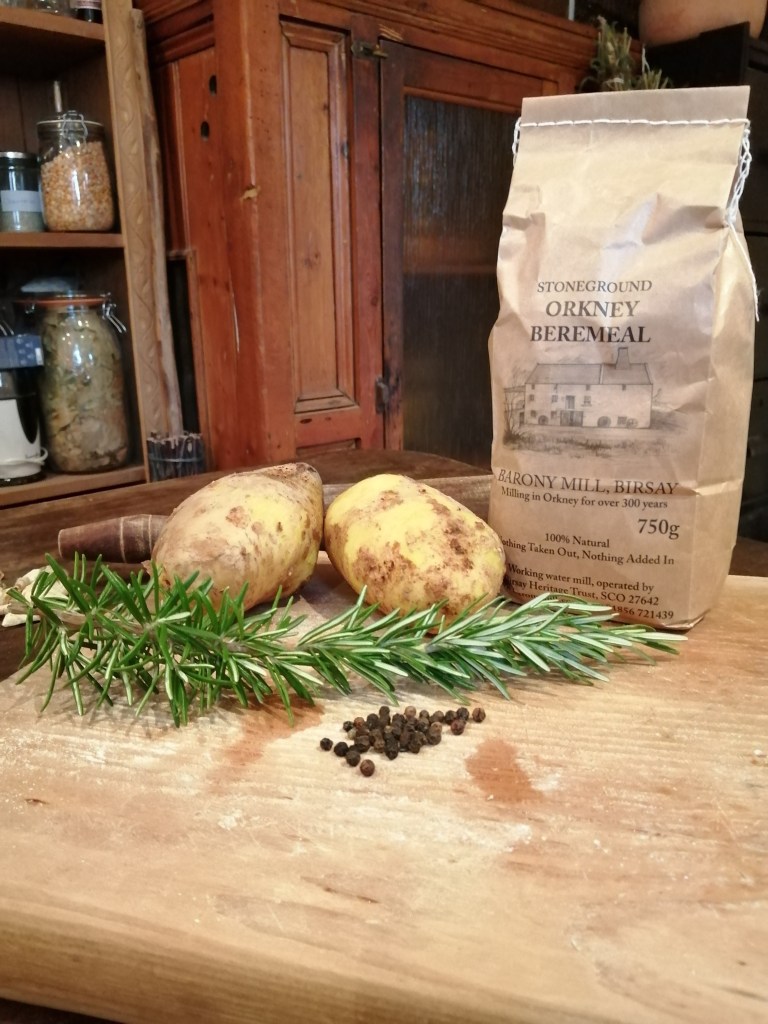
- 6oz (175g) mashed potato
- 2oz (10g) beremeal
- a splash of water (you can choose 1/4oz/10g melted butter)
- I like to add rosemary and black pepper as well
Equipment
- Mixing bowl
- Gridle or large frying pan
- Chopping board
Recipe
- Prepare the potato.
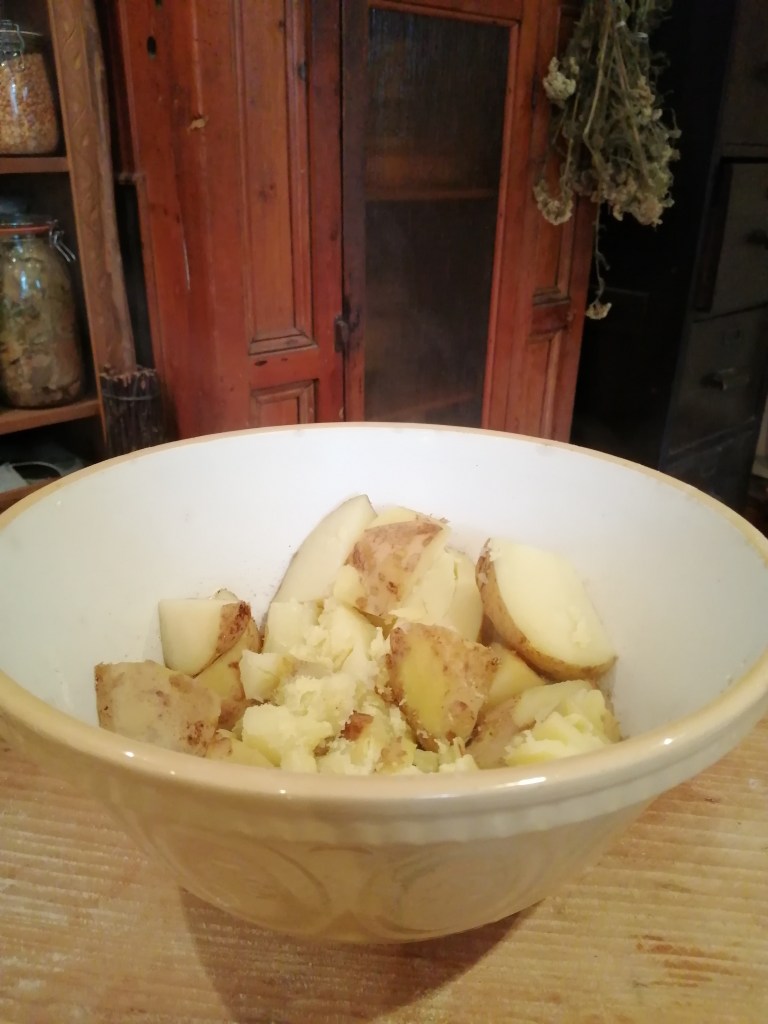
2. Mix the potato and flour.
3. Add the water (or butter) to create a dough.
4. Place the dough onto a board and knead until smooth.
5. Split into two balls.
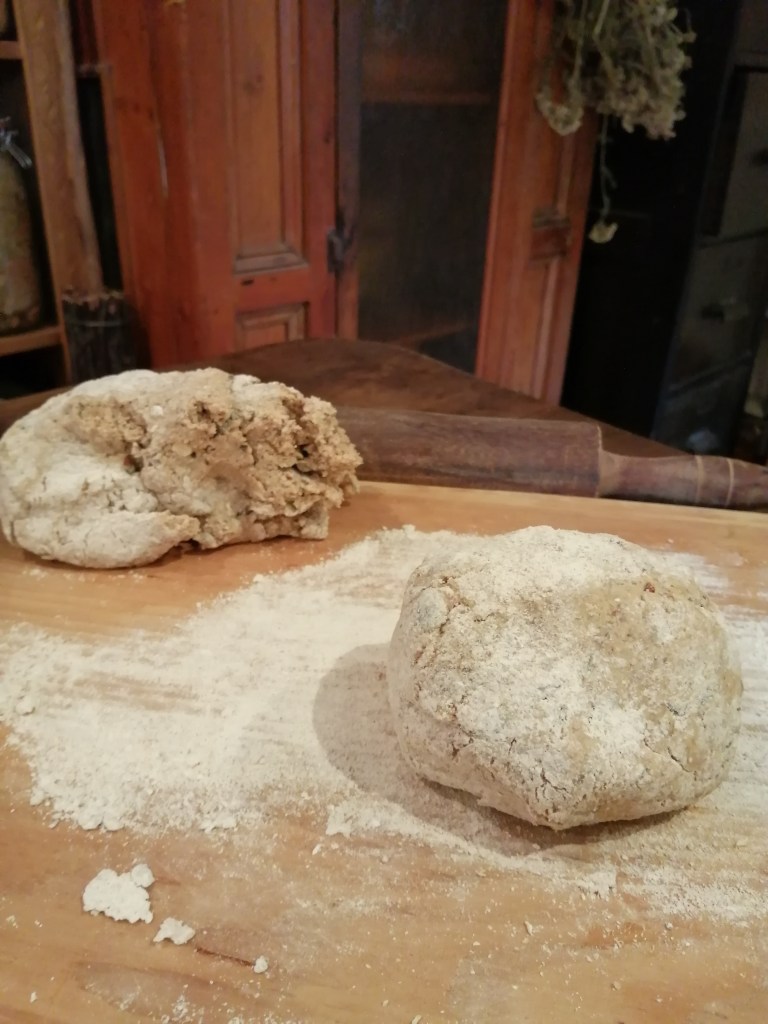
6. Dust the board with bere and roll the first ball flat. The circle should be roughly 5mm thick.
7. Cut into quarters.
8. Heat the gridle or pan and bake the scones for 3 to 4 minutes on each side. If you feel that the scones will stick, add a little bere to the pan (or cheat and use a dash of oil).
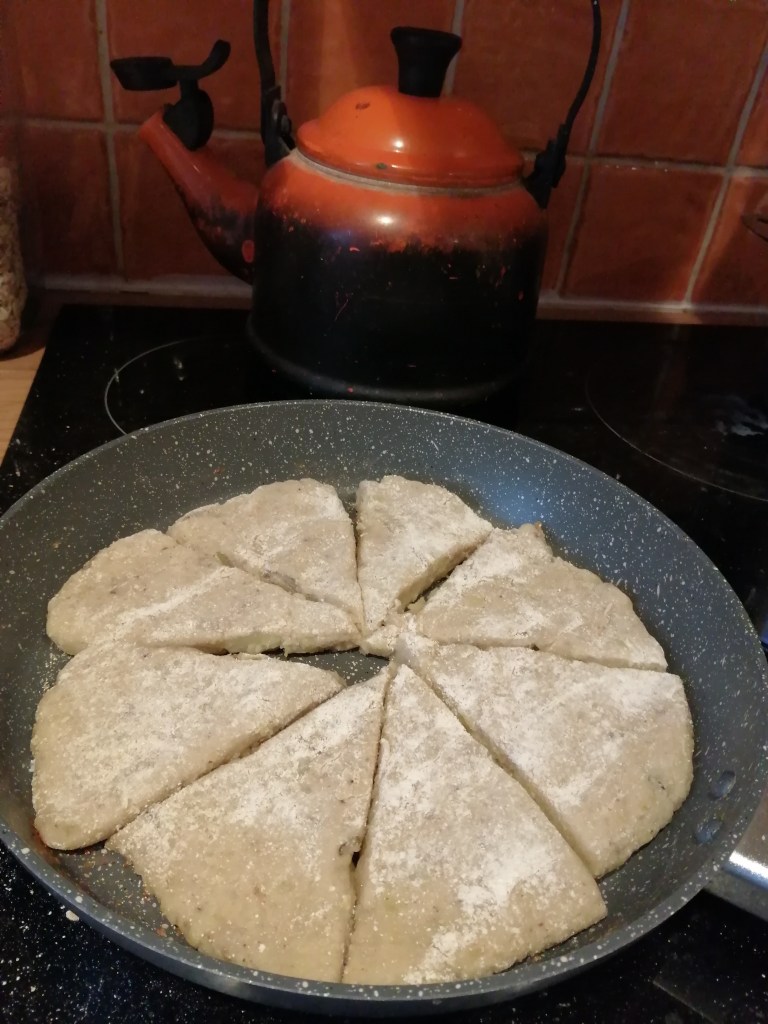
9. Repeat with the second circle.
10. Allow to cool or serve when hot.
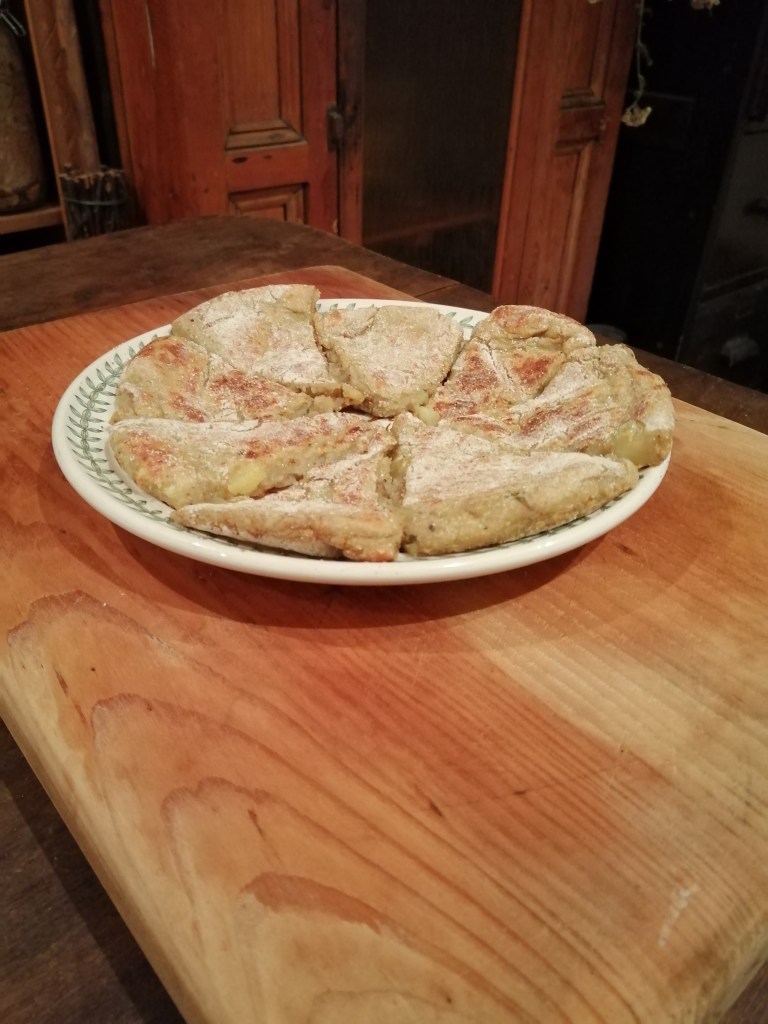
As you can see, this is an incredibly simple recipe and yet a perfect taste of Orkney. There is something traditional in these store room staples – something that harks back to simpler times when the winter pantry would have held an abundance of these two foods. Perhaps it is not healthy, but in our pursuit of a romantic past it is important to remember that times were hard, people ate what they were given and nutrition was placed far below survival in a list of priorities. The Orkney islands are a harsh landscape of sea and treeless land, where beauty and challenge come hand in hand. I think that every place and moment in history should be taken with a pinch of salt, which can either be added to your recipe or used simply figuratively so as to better connect with this island and its past.
If you have an interest in learning more about this grain and the Orcadian mill from which you can buy it, I recommend Living Field‘s website, Barony Mill‘s website or Liz Ashworth’s The Book of Bere: Orkney’s Ancient Grain.

